Views: 0 Author: Site Editor Publish Time: 2026-06-08 Origin: Site
A turn signal that keeps blinking after the steering wheel straightens is more than a minor annoyance. It can confuse nearby drivers, and the cause is not always the turn signal switch itself. A shallow steering movement may not trigger the canceling mechanism, while repeated failure after a normal turn can point to a worn canceling cam, a damaged internal spring, or steering-column misalignment. Looking at which direction fails, how the stalk feels, and whether it cancels manually can help narrow the fault before unnecessary parts are replaced.
Automatic cancellation depends on steering-wheel movement, not simply on the vehicle changing direction. During a normal corner, the wheel rotates far enough for the cam to move past the switch actuator. When the wheel turns back toward center, the cam approaches from the opposite direction and releases the stalk from its detent. A small lane correction or gentle curve may never complete that mechanical sequence.
This behavior is generally normal when the indicator cancels reliably after ordinary street turns but remains active after minor steering inputs. The stalk should still feel firm, hold its selected position, and return normally when touched by hand. If it fails after full left and right turns, however, limited steering angle is no longer a convincing explanation. The cancellation components should then be treated as possible fault areas rather than assuming that the driver simply made too small a turn.
The canceling cam is typically positioned below the steering wheel and rotates with the steering shaft or clock spring rotor. Raised lobes or tabs on that cam physically interact with an actuator in the switch housing. Repeated contact can wear the edges, fracture a projecting tab, or leave the cam unable to reach the release point. Once that mechanical link is lost, the indicator circuit may still operate normally even though the stalk no longer resets automatically.
A direction-specific problem offers a useful clue. If right turns cancel normally but left turns do not, one lobe or one contact surface may be more worn than the other. Some steering-column designs integrate the cancellation lobes into the clock spring rotor, while others use a separate collar or cam. For that reason, a technician should inspect the actual cancellation tab before condemning the switch assembly.
Even with an intact cam, the mechanism inside the turn signal switch may fail to release. A weakened return spring, worn detent, cracked plastic support, or stiff internal slider can prevent the lever from moving back to neutral. The stalk may feel loose, unusually stiff, inconsistent, or less positive than it did previously. Loss of the normal tactile click is another sign that the internal mechanism is no longer holding or releasing correctly.
Another related symptom occurs when the signal works only while the lever is being held. That behavior suggests the stalk cannot remain secured in its selected detent. Although the symptom differs from a signal that stays on, both problems can originate within the same mechanical switch housing.
Compare the left and right signals during turns that require a similar amount of steering-wheel rotation. If only one direction consistently fails, the defect is more likely to involve one cam lobe, one actuator surface, or one side of the internal release mechanism. The lighting circuit itself is still capable of operating, so a general fuse or power-supply failure would not fit the symptom well.
Direction-specific testing is more useful than repeatedly operating the stalk while the vehicle is parked. The cam must rotate through the same sequence it experiences during a real turn. A safe, low-traffic area allows the driver to compare both directions without making abrupt or artificial steering movements.
When neither side cancels after a full turn, the fault may affect the entire mechanical interface. A completely damaged cam, an incorrectly positioned collar, a loose switch housing, or a failed internal return mechanism can interrupt cancellation in both directions. Recent steering-wheel or steering-column work also raises the possibility that functional parts were reassembled out of alignment.
Failure on both sides does not automatically prove that the switch’s electrical contacts are defective. If the stalk can still be moved to neutral and the lights stop immediately, the electrical command is responding. The missing function is the mechanical action that should move the lever without the driver’s help.
Manual cancellation is one of the strongest diagnostic separators. When the indicator stops as soon as the lever is centered, the bulbs, main signal command, and much of the operating circuit are still responding to stalk movement. Attention should shift toward the canceling cam, actuator, alignment, detent, spring, and switch housing.
Replacing a bulb, flasher unit, or fuse is unlikely to restore automatic stalk movement when the lights otherwise flash at a normal rate. Those components control illumination or circuit operation, not the physical release of the lever. Mechanical inspection should come before unrelated electrical part replacement.
The feel of the lever can reveal a different failure pattern. A stalk that will not latch may have a worn detent or broken internal support. One that feels unusually loose may have lost spring tension, while a sticky lever may be binding because of wear, contamination, or deteriorated internal lubrication. If the stalk cannot be moved back to neutral, the switch requires prompt inspection because the driver may be unable to communicate intentions reliably.
Symptom | Most likely area | Main diagnostic clue |
Only one direction fails to cancel | One cam lobe or release point | The opposite direction still works |
Both directions fail after full turns | Cam, alignment, or internal mechanism | The complete cancellation function is affected |
Flashing stops when centered manually | Mechanical cancellation system | The circuit still responds to stalk movement |
Lever feels loose or will not latch | Internal switch components | The stalk cannot hold its detent |
Fault began after steering work | Incorrect alignment or assembly | Components may no longer meet correctly |
Signals communicate a driver’s intended movement to surrounding traffic, so they should also be switched off once the maneuver is complete. Until repairs are made, the driver should cancel the indicator manually after every turn rather than allowing it to provide misleading information.
Testing should begin with observation rather than disassembly. In a safe location, compare the signal after a shallow lane change, a normal street corner, and similar left and right turns. Reliable cancellation after full turns but not after small steering movements may reflect the system’s operating threshold. Repeated failure after substantial wheel rotation points more strongly toward mechanical wear or misalignment.
Listen and feel as the stalk is selected. It should engage with a clear detent and remain in place without being held. After the turn, note whether the stalk moves at all, whether a faint internal click is heard, and whether a light manual touch returns it to neutral.
Observe the steering wheel while driving straight on a level road. A wheel that sits noticeably off-center may indicate an alignment issue or incorrect steering-wheel positioning. Ask whether the symptom began after airbag service, clock spring replacement, steering-wheel removal, suspension work, or another repair involving the column. An intact cam can still miss the actuator when the components are installed at the wrong angle.
Complete switch replacement is not always necessary. A misaligned canceling collar, off-center steering-wheel installation, displaced actuator, or separately serviceable cam may be corrected without replacing a functioning stalk assembly. This is particularly plausible when the problem begins immediately after steering-column work and the lever still feels normal.
Both sides of the mechanical interaction must be inspected. The rotating cam or collar needs intact contact surfaces, while the actuator inside the switch must extend and release correctly. Looking at only the stalk can miss a broken tab on the adjacent housing; inspecting only the cam can overlook a damaged spring or detent inside the switch.
Temporary repairs deserve caution. Gluing a cracked tab, bending a worn actuator, or reshaping plastic may restore movement briefly without providing dependable cancellation. A component that cannot maintain its intended shape and alignment should be replaced according to the applicable service procedure.
Replacement becomes more reasonable when the internal return spring is broken, the housing is cracked, the stalk will not latch, the contacts remain unreliable, or the cancellation components are not separately serviceable. Multiple failures involving lighting, high-beam, or wiper controls may also point toward a worn multifunction assembly rather than a single external cam. Non-canceling operation, looseness, and loss of the normal tactile click are common warning signs of mechanical switch failure.
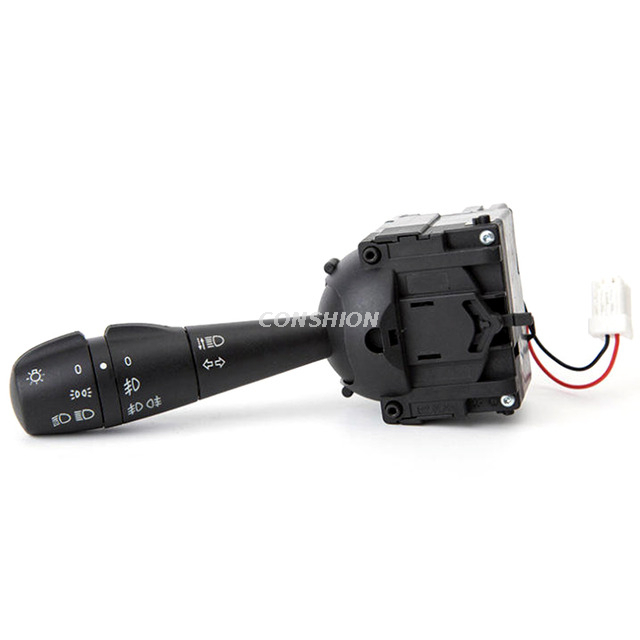
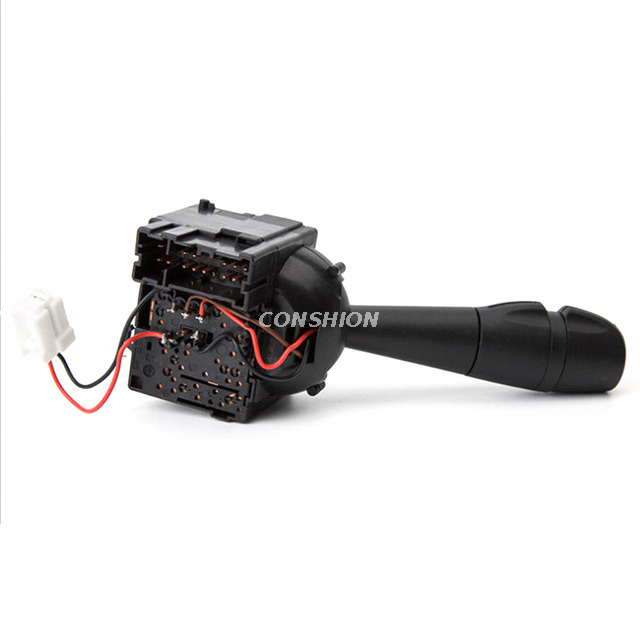
For vehicle-specific replacements, Conshion provides turn signal switch assemblies for different automotive applications. The 96658421XT is a vehicle-specific turn signal switch intended for specified Citroen Berlingo and Peugeot 207 and 307 applications. This type of product matching shows why compatibility should be determined by vehicle information and reference number instead of the stalk’s external appearance alone.
Before ordering, verify the vehicle’s production details, OE or cross-reference number, connector shape, pin layout, stalk functions, and steering configuration. Determine whether the replacement is a standalone switch, part of a combination assembly, or supplied with related cancellation components. Two parts may look nearly identical while using different terminals, internal circuits, or control features.
Compare the replacement with the removed unit before installation. Check every connector, mounting point, stalk function, and reference marking. Do not assume that matching the vehicle model alone is sufficient because equipment levels and production changes may alter the column assembly.
Access may require working near the driver airbag and clock spring. Some designs also require the steering wheel to be positioned correctly, fasteners to be tightened to specified values, and steering-related sensors to be checked or calibrated afterward. Airbag removal and sensor calibration create meaningful safety and installation risks during steering-column repairs.
A turn signal that will not cancel after a turn often points to a worn canceling cam, misalignment, or an internal turn signal switch fault. Comparing left and right operation, checking whether the stalk returns manually, and noting other steering-wheel symptoms can help avoid replacing unrelated parts. When replacement is necessary, correct vehicle fitment, OE reference, connector layout, and integrated functions should be confirmed. Zhejiang Conshion Electrical Group Co., Ltd. supplies vehicle-specific turn signal switches that can help restore dependable indicator control when the original switch is damaged or worn.
A: A worn canceling cam, broken tab, misaligned steering component, or damaged internal switch spring may prevent the stalk from returning to neutral automatically.
A: Common signs include a loose or sticky stalk, failure to latch, signals working only when held, or flashing that continues after manual cancellation.
A: Yes. Small steering movements may not rotate the canceling cam far enough. Consistent cancellation after normal street turns usually indicates the system is operating correctly.
A: One side of the canceling cam or release mechanism may be worn, broken, dirty, or misaligned while the opposite contact point remains functional.
A: The vehicle may remain drivable if the signal cancels manually, but the flashing indicator can mislead other drivers and should be repaired promptly.