Views: 0 Author: Site Editor Publish Time: 2026-06-03 Origin: Site
Intermittent wipers can fail in ways that make the cause difficult to judge. The blades may ignore the selected delay, stop halfway across the windshield, run continuously, or work normally on low and high speeds. A faulty wiper switch can create some of these symptoms, but so can the motor, park circuit, relay, wiring, or linkage.
The most useful clue is how the blades behave across different settings. Comparing the failed modes, sweep speed, noise, and parking position can narrow the fault before any part is replaced and help separate a control problem from a motor or mechanical failure.
Test every available function separately before deciding whether the wiper switch or motor is defective. Try each intermittent delay, followed by low speed, high speed, mist, washer activation, and the off position. Watch whether the blades complete a full cycle and return to the bottom of the windshield after each test.
A failure limited to intermittent mode is fundamentally different from weak operation across all settings. If low and high speeds move the blades normally, the motor has demonstrated that it can still produce continuous motion. The remaining suspects include the intermittent contacts inside the wiper switch, the input wiring, a relay, the control module, or the park feedback circuit. Delay-only faults must therefore be assessed separately from problems that affect normal two-speed motor operation.
One working mode does not prove every motor circuit is healthy. The motor may contain separate low-speed, high-speed, and park connections, while the intermittent function may depend on a module or relay. Still, identifying which modes survive narrows the test path far more effectively than describing the system as working “sometimes.”
Control-side faults usually change whether a wipe begins or how long the system waits before the next sweep. Motor and linkage faults more often change the speed, strength, range, or final position of the blades. This distinction provides the first useful diagnostic split.
A weak sweep on every setting may indicate a tired motor, excessive linkage resistance, low voltage, or a poor ground. Blades that stop immediately when the control is switched off may have lost the park signal needed to finish the cycle. Audible motor operation with little or no blade movement instead suggests that the electrical system is working but the linkage is not transmitting motion correctly.
Wiper behavior | First area to inspect | Why it matters |
Intermittent mode fails, but low and high work | Wiper switch input, relay, or control circuit | The fault is limited to one requested mode |
Every delay position gives the same interval | Switch contacts, signal circuit, or wiring | The controller may not recognize the selected delay |
Wipers are slow on every setting | Motor, linkage, power supply, or ground | The problem affects physical movement |
Wipers stop halfway or park incorrectly | Motor park circuit | The sweep is not being completed normally |
Motor noise is present, but blades do not move | Linkage, pivots, or arm connections | Motor rotation may not be reaching the blades |
Nothing works in any mode | Fuse, relay, wiring, switch, module, or motor | The entire power and command path must be tested |
An unresponsive delay control is one of the clearest signs of a switch-side problem. The blades may continue wiping intermittently, but rotating the delay ring or selecting another interval produces no meaningful change. In that situation, the motor is carrying out repeated sweeps, yet the system may not be receiving distinct timing requests.
Many intermittent systems identify the selected delay through changing resistance values or electronic switch inputs. Worn internal contacts, contamination, a damaged conductor, or poor terminal contact can prevent the controller from distinguishing one setting from another. The result may be a fixed interval, an unpredictable pause, or intermittent mode that works only at one position.
Pay attention to the difference between the pause and the actual sweep. A long or incorrect wait followed by a normal-speed wipe points toward the command or timing side. Blades that travel slowly across the windshield indicate a motor, linkage, voltage, or ground problem instead.
Electrical testing separates a suspected wiper switch from downstream components. Depending on the vehicle design, a technician may check continuity, compare resistance values at different delay positions, or monitor live input data from the control module. The connector should also be examined for backed-out pins, corrosion, heat damage, looseness, or broken wiring near the steering column.
The result creates a clear decision point. If the control module does not recognize the selected switch position, the wiper switch and its wiring require further inspection. When every command appears correctly in the data stream, attention should move to the relay, module output, motor circuit, and park feedback.
A capable scan tool can be particularly useful on electronically controlled systems. If the wipers operate correctly when commanded through the diagnostic tool but fail when operated from the stalk, the motor and much of the output circuit have already demonstrated that they can work. The missing or incorrect switch input then becomes the stronger lead.
Motor-side problems tend to affect the quality of movement across more than one mode. The blades may sweep slowly on both low and high settings, hesitate before moving, or stop after several minutes and restart once the system cools. Humming or straining sounds from beneath the cowl also suggest that electrical power is reaching a component that cannot turn normally.
A failing motor is not the only cause of these symptoms. Seized pivot shafts, corroded joints, bent linkage, or excessive friction can force a healthy motor to work beyond its normal load. The increased resistance may slow the blades, raise current draw, heat the motor, and eventually cause temporary shutdown.
Test movement under suitable conditions rather than running dry blades repeatedly across clean glass. The windshield should be wet, and frozen or obstructed blades must be freed before operation. If the design allows the linkage to be separated safely, testing the motor without the mechanical load can help determine whether the resistance is inside the motor or within the linkage.
The park circuit keeps the motor operating after the driver selects off until the blades reach their resting position. Once that position is reached, the internal park switch changes state and allows the motor to stop. A fault in this circuit can cause the blades to stop wherever they happen to be, perform extra sweeps, or continue running unexpectedly.
Parking faults should not be confused with delay faults. The intermittent timer determines when the next cycle begins, whereas the park circuit confirms that the current cycle has ended in the correct place. A system can have normal delay timing but stop halfway across the glass, or it can park correctly while ignoring every delay adjustment.
The park switch is commonly incorporated into the motor assembly, although designs vary. When the park input does not change as the blades move, the park circuit, wiring, or motor assembly becomes the primary area of concern. Testing this changing input helps distinguish a park fault from a general switch-command problem.
Check the relevant fuse before removing steering-column or cowl components. A visual inspection alone may miss a cracked fuse element, so confirm continuity when necessary. Use the vehicle’s fuse and relay diagram rather than assuming that a similarly positioned component controls the wipers.
Inspect accessible wiring, grounds, and connectors at both the wiper switch and motor. Look for green corrosion, loose terminals, damaged insulation, overheated plastic, or wires strained by previous repairs. Voltage loss at a poor connection can make a good motor appear weak.
Mechanical checks belong at this stage as well. Confirm that the arms are secure, the joints remain connected, and the pivots do not bind. Replacing an electrical part will not correct a seized linkage, and installing a new motor against the same resistance may damage the replacement.
Once the basic checks are complete, compare what the driver requests with what the motor receives. The correct test points depend on the wiring diagram, but the diagnostic logic remains consistent:
1. No command reaches the controller: test the wiper switch, connector, and input wiring.
2. The command arrives but no output is produced: inspect the relay, control module, and output circuit.
3. Correct voltage and ground reach the motor but it does not run: the motor is the stronger suspect.
4. The motor runs but blade movement is incorrect: inspect the linkage, pivots, and arm connections.
5. The blades move but fail to park: test the park input and related motor circuit.
Do not apply generic power or ground to unidentified terminals. Modern systems may use module-controlled circuits rather than a simple direct connection between the wiper switch and motor. An incorrect jumper test can damage the controller or create misleading results.
Steering-column work also requires care because other electrical and safety-related components may be located nearby. Follow the correct service procedure before disconnecting or removing the stalk assembly. Professional diagnosis is appropriate when circuit information, scan data, or safe access is unavailable.
A confirmed switch fault is only the first half of a correct replacement. Visually similar controls may have different connectors, pin assignments, intermittent functions, washer commands, or rear-wiper settings. Matching the part by shape alone can leave the original fault unresolved or introduce new functions that do not operate.
Verify the OE or reference number, connector shape, pin count, terminal arrangement, vehicle application, and production period. Compare every control symbol and stalk function with the original part. Where possible, inspect the existing connector before ordering.
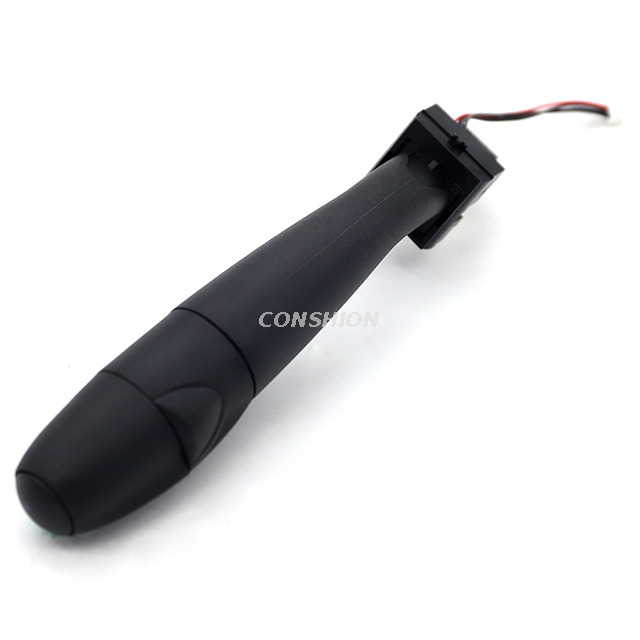
Conshion offers application-specific wiper switches with references such as 8460016664 for selected Renault Clio, Megane, and Scenic applications and 299139538 for the Hyundai Creta. The 299139538 configuration uses 14 pins, demonstrating why the OE reference and electrical layout must be checked together rather than relying only on visual similarity.
Before completing the purchase or installation, confirm the following:
● The failed component has been verified through testing.
● The fuse, relay circuit, wiring, and grounds have been checked.
● The linkage moves freely and remains connected.
● The switch reference matches the original component.
● The connector and pin arrangement are identical.
● All required front, rear, mist, washer, and delay functions are included.
● The motor park circuit has been tested when parking is part of the complaint.
Intermittent wiper faults are easier to diagnose when each operating mode is tested separately. Normal low and high speeds with inconsistent delay settings usually point toward the wiper switch or its input circuit, while slow movement, noise, poor parking, or incomplete sweeps suggest a motor or linkage problem. Checking the fuse, wiring, switch signal, motor power, and mechanical movement before replacing parts helps avoid unnecessary repairs.
When a compatible replacement is required, Zhejiang Conshion Electrical Group Co., Ltd. supplies application-specific wiper switches designed to match defined vehicle references, connector layouts, and control functions.
A: Mode-specific problems usually suggest the switch or control circuit. Slow movement, humming, mid-sweep stopping, or incorrect parking more often indicates the motor, park circuit, or linkage.
A: The motor can still operate continuously, but the intermittent command may be lost because of worn switch contacts, damaged wiring, a faulty relay, or a control-module problem.
A: Yes. Worn or shorted contacts can send an incorrect command. However, a stuck relay, faulty control module, or defective motor park switch can cause similar behavior.
A: Mid-sweep stopping commonly points to a faulty park circuit, weak motor, poor electrical connection, or binding linkage that prevents the blades from completing their normal cycle.
A: Not immediately. First check motor voltage, ground connections, linkage resistance, seized pivots, and loose arm connections, because mechanical drag can make a healthy motor appear weak.